Jurabi Turtle Centre &
the Ningaloo Turtle Program
The Ningaloo Coast is famous for its reef, beaches and marine life — but after dark, a quieter and equally important story unfolds along the sand.
Each year, marine turtles return to the beaches around Exmouth to nest, following ancient migration routes that have existed long before the town itself. The Jurabi Turtle Centre and the Ningaloo Turtle Program play a key role in protecting these turtles and helping visitors understand how to observe them responsibly.
Where is the Jurabi Turtle Centre?
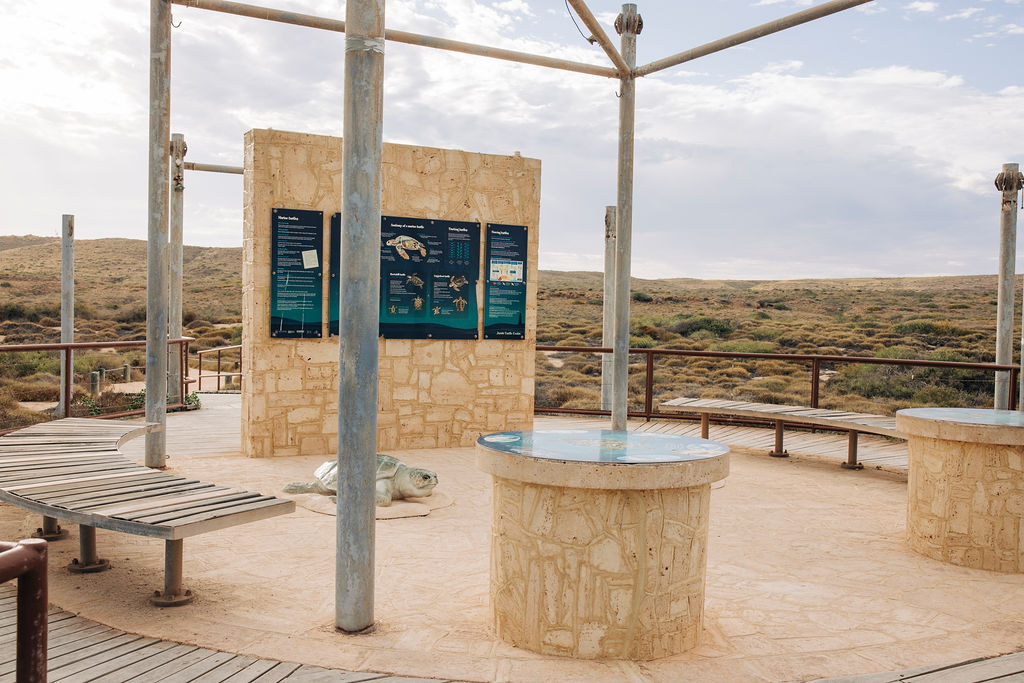
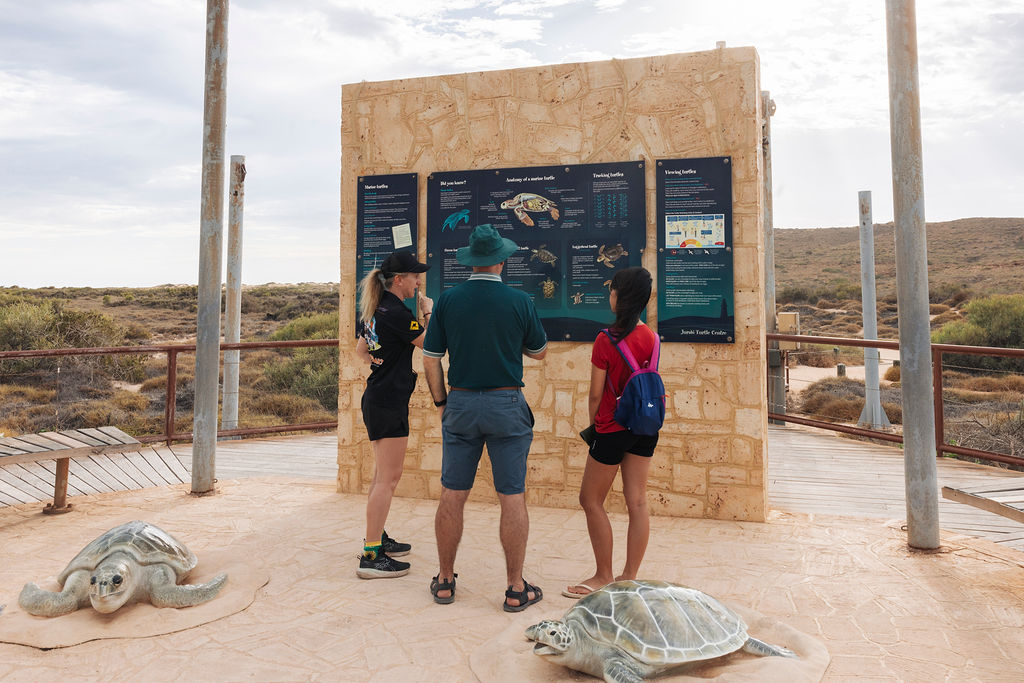
The Jurabi Turtle Centre is located in Jurabi Coastal Park, about 20 minutes’ drive north of Exmouth. Positioned near important nesting beaches, the centre acts as an educational hub rather than a traditional visitor attraction.
It’s open at all times and features interpretive displays explaining:
- The life cycle of marine turtles
- Why the Ningaloo Coast is such an important nesting area
- How human activity can impact nesting success
- What to do (and what not to do) if you encounter turtles or hatchlings
It’s a worthwhile stop before heading to nearby beaches during turtle season.
Turtle Nesting Season at Ningaloo
Turtle nesting typically occurs between November and March, with peak activity often seen from December through February.
Several species nest along the Ningaloo Coast, including:
- Loggerhead turtles
- Green turtles
- Hawksbill turtles
Female turtles come ashore at night to dig nests and lay their eggs, returning to the ocean once the process is complete. Around two months later, hatchlings emerge and make their way to the sea — a short journey that carries significant risk.
Because turtles are highly sensitive to light, noise and movement, responsible behaviour is critical during this time.
The Ningaloo Turtle Program
The Ningaloo Turtle Program (NTP) is a long-running community conservation initiative that monitors turtle nesting activity along the coast.
Supported by trained volunteers, the program focuses on:
- Recording nesting and hatchling data
- Monitoring nesting success and beach conditions
- Helping manage threats such as predators and human disturbance
- Educating the community and visitors about turtle conservation
This data contributes to long-term research and helps guide conservation decisions across the region.
Guided Turtle Eco-Education Tours
During nesting season, guided Turtle Eco-Education Tours are offered through Parks and Wildlife. These tours are designed to give visitors the chance to see turtles while minimising disturbance.
Participants receive a briefing on turtle behaviour and conservation before visiting nearby beaches under supervision. Not every tour results in a sighting — and that’s part of the experience — but the focus is always on learning and respect rather than guaranteed encounters.
How to Observe Turtles Responsibly
If you’re visiting beaches during turtle season, a few simple guidelines make a big difference:
- Avoid white lights, torches and flash photography
- Keep a respectful distance from turtles and nests
- Stay low and quiet
- Never touch turtles or hatchlings
- Follow signage and local advice
Small actions help ensure turtles can continue returning to these beaches year after year.
Why It Matters
Turtles have been nesting along the Ningaloo Coast for thousands of years. The work done at the Jurabi Turtle Centre and through the Ningaloo Turtle Program helps balance increasing visitor interest with the need to protect these animals at their most vulnerable.
For locals and visitors alike, it’s a reminder that Exmouth’s natural environment is something we all share responsibility for — on land, at sea, and even after the sun goes down.
-
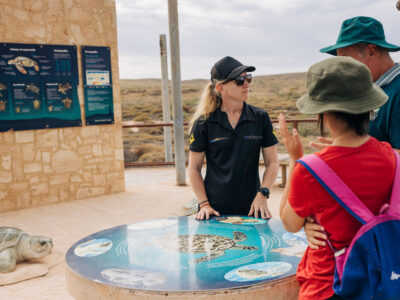
- Jurabi Turtle Centre
-
- It’s open at all times and features interpretive displays
-
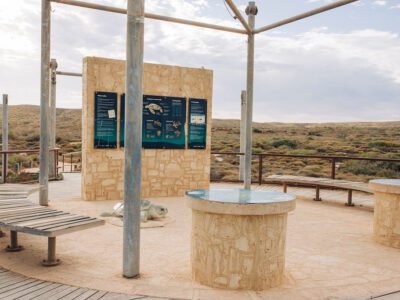
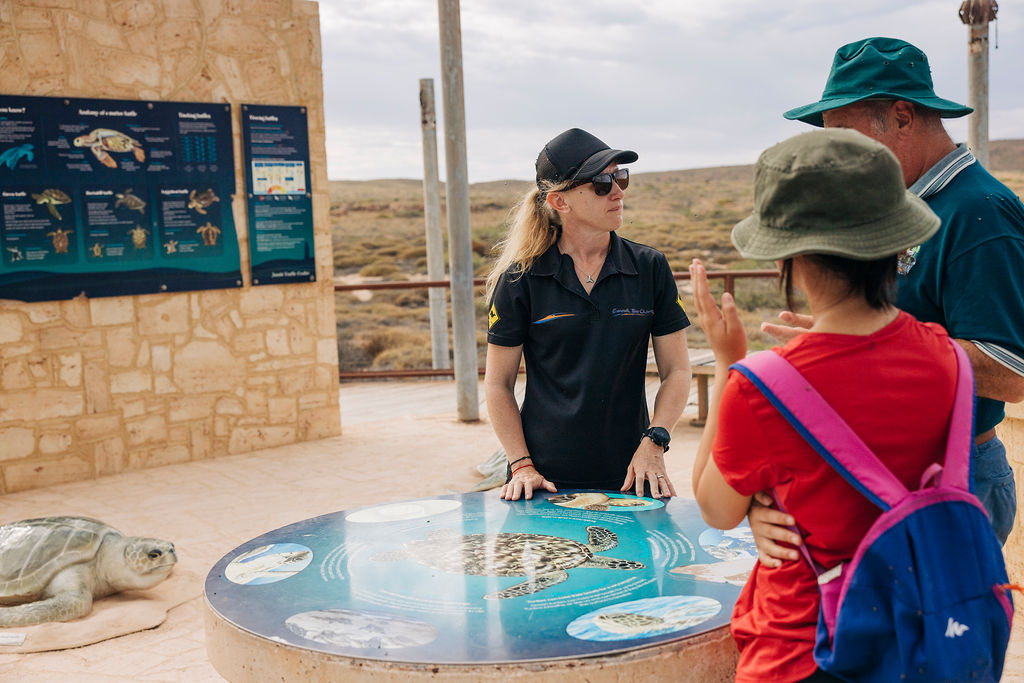
- The centre acts as an educational hub